Local History: ‘PROTESTS, FESTIVALS AND RENOVATION: Belsize from 1945-2000’
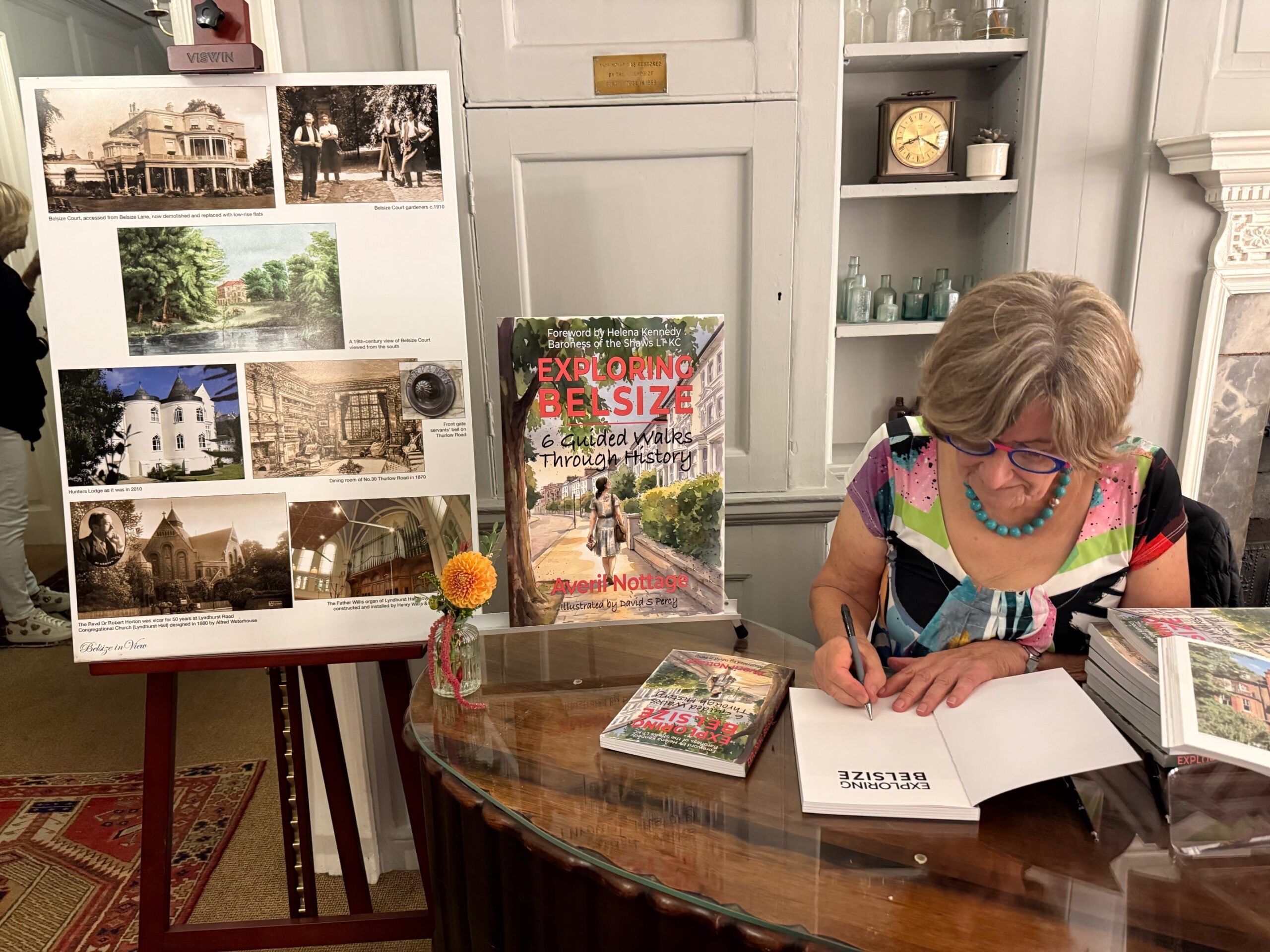
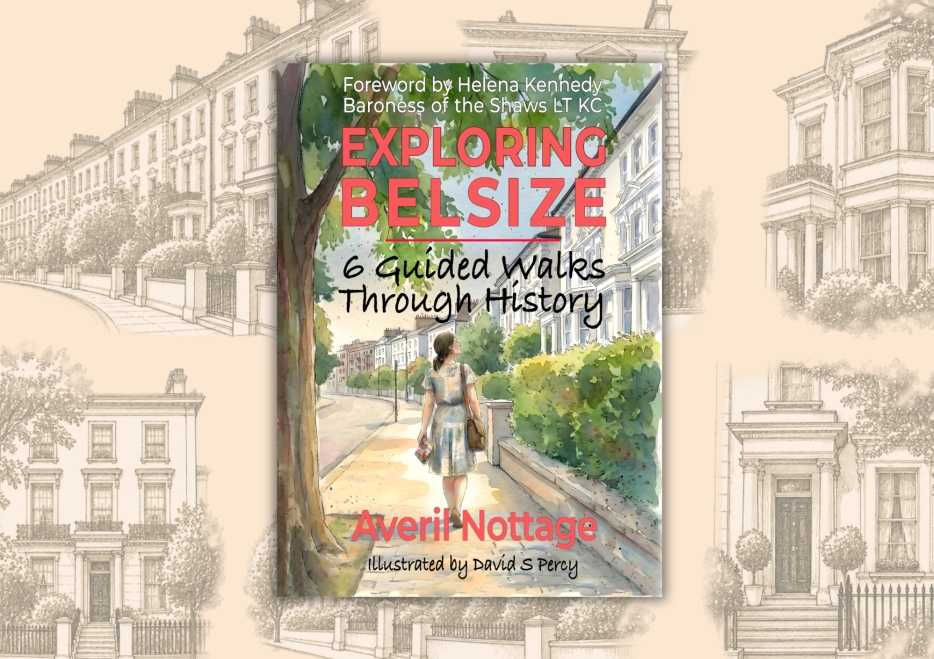
Averil Nottage gives us a flavour of her autumn historical walk for BelSoc:
As darkness fell on 8 May 1945, Belsize residents crowded around huge bonfires to celebrate the end of the war. There was red, white and blue everywhere, in flags, bunting, hair ribbons and rosettes. But whilst the bombs had stopped, the privations had not. Food, fuel and clothes would be rationed for many years to come.
In 1945 most of the houses in Belsize were in a very poor state. Scores of buildings had been destroyed, and many more suffered from bomb damage or neglect. As soldiers and evacuees returned, Hampstead Council requisitioned empty properties and started building blocks of flats to cope with the growing housing waiting list.
In the 1950s the Church Commissioners decided to sell off the freeholds of dilapidated properties on the Belsize Estate to avoid being responsible for them when their leases expired. Eton College was similarly concerned that scruffy houses yielded little income. In the early 1960s they decided to upgrade the heart of their estate around Adelaide Road with leasehold town houses and four tower blocks. Hampstead Council took over the tower blocks to rehouse tenants displaced by this private development. It was intended to be the first stage of a complete redevelopment of the Chalcot Estate.
In 1958 Hampstead Council appointed Basil Spence, a leading modernist architect, to design a new Civic Centre in Swiss Cottage.
A planned 50 metre high administrative block was dropped when it became clear that Hampstead would become part of the Borough of Camden in 1965. The library and swimming pool were opened by Queen Elizabeth in 1964 (this picture is from Camden History Library) .

In 1962, the Hampstead Theatre Club moved into a temporary studio theatre on the site where they remained for over 40 years. The theatre gained a reputation for successfully spotting and supporting emerging playwriters. In 1974, as discussions continued about the use of the rest of the area, a busy unofficial market sprung up selling homemade food, second hand clothes, books, bric-à-brac and plants.
With many young bedsit dwellers, including artists, actors and musicians, Belsize was a lively place to live in the 1960s. The Witch’s Cauldron coffee bar in Belsize Lane was a favourite haunt. At weekends pop and R and B groups played in the downstairs cellar. A young Rod Stewart was amongst them.
Folk enthusiasts went to the Loft in Elizabeth Mews or the Hole in the Ground in Winchester Road. The Country Club, off Haverstock Hill, was a significant venue for blues and rock bands. The Rolling Stones, Pink Floyd, Jimi Hendrix and David Bowie all played there.


In the late 60s and early 70s a proposed motorway threatened to split Belsize in two and sweep away swathes of Victorian houses. A well supported local campaign, working with many other action groups, helped to get it dropped.
This was the first of many battles against the impact of cars on Belsize. In the 1990s a rat run through Belsize village was successfully stopped when Belsize Terrace was pedestrianised. Other campaigns focused on preserving significant buildings and creating conservation areas to cover almost all of Belsize.
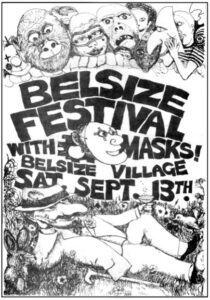
Between 1974 and 1989 large crowds flocked to the annual Belsize Festival. As well as a full and varied music programme, other attractions included clowns, fire eaters and Morris dancers. Sadly, several wet years dampened enthusiasm for organising it.
From the 60s onwards blocks of flats and small houses were built wherever space could be found, their simple lines in stark contrast to the properties around them. But gradually fashions changed. Young middle-class couples rediscovered Belsize, buying and renovating flats in neglected houses. Victorian houses, that had been seen as ugly and vulgar, became desirable again. For many landlords it became more profitable to sell their properties than to let them.
In 1961 less that 15% of households in the Belsize ward were owner occupied but by 1991 it had risen to over 50%. The total number of households reduced by nearly 40% as bedsits were replaced by flats. Living in Belsize soon became financially out of the reach of many former residents. Cafés and restaurants flourished, spilling out onto the wide pavements, and celebrity spotting became a popular pastime. The smart Belsize of 2000 looked very different from the run-down area of half a century earlier, but its character still shone through.
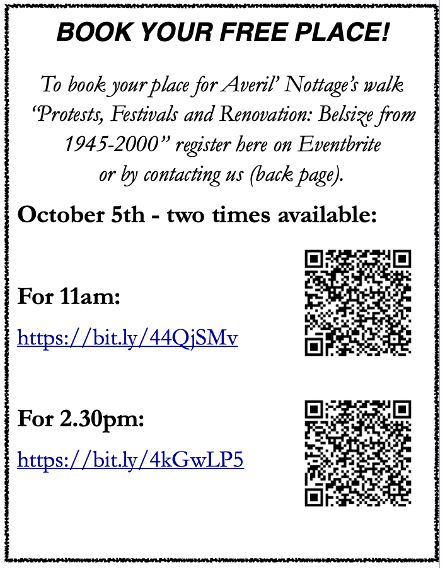
This is a taster for a free walk that Averil will lead on Sunday October 5th at 11.00 am and 2.30 pm. It is the last in her series of 6 walks covering the history of Belsize. The walk starts in the open space at Swiss Cottage, to the left of the library entrance. It will last about 90 minutes and end on Belsize Lane in Belsize Village. Book your place on Eventbrite – details on the box here – numbers are limited!