Michael Little PhD, from Ratio, writes:
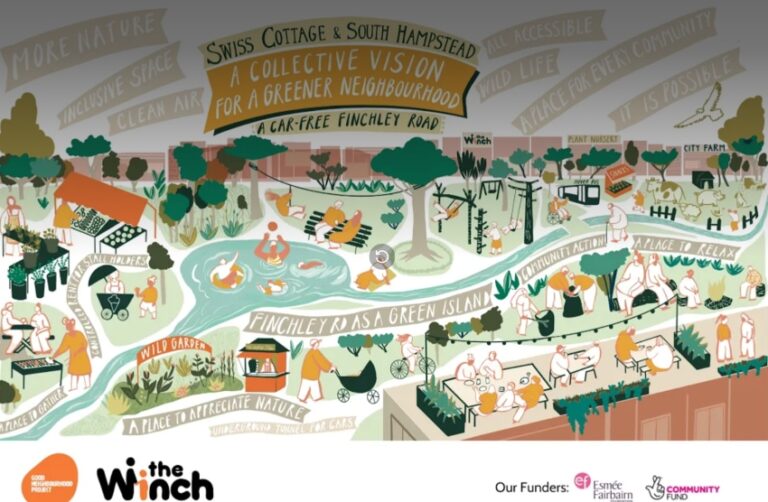
The Winch has a long and distinguished history of acting as a conduit between community and local government. The Winch is always seeking to innovate. The first phase of the Good Neighbourhood Project gave local people the opportunity to imagine ways of making their community fairer, and local residents tested out new ideas. In the second phase, The Winch is facilitating a Citizens’ Assembly, an opportunity for a representative group of local people to deliberate on how to respond to changing climate.
Michael Little from Ratio is the learning partner for The Winch on this work. Ratio is a 10 year investigation into the ways in which relationships between people influence health and well-being, at the one-to-one level, at neighbourhood level, at local authority level, and nationally.
Ratio operates a little differently than a lot of research centres. It encourages organisations and innovators to learn from their mistakes, and to use that learning at each stage of the process of innovation. In addition, the learning isn’t just for The Winch, it is for everybody involved in the process, and especially local residents.
A lot of the learning comes from regularly observing how the work proceeds, and talking to those involved. But these days, analysis of conversations can reveal a lot about changing patterns of connection, trust and belonging in groups, and, with the consent of Assembly members, Ratio will be applying these methods.
At the heart of the work is the question of deliberation. A Citizens’ Assembly is a type of ‘deliberative democracy’. Ratio will be interested in whether how participants discuss difficult issues, how they manage divergent points of view, and whether they change their minds.
The Winch are also interested to discover whether the legitimacy that comes from selecting by sortition* a representative group of residents -as opposed to working with people who volunteer to take part- will lead to Assembly conclusions being taken more seriously by local government policy makers.
All of this work has wider potential. We live in an age where disagreeing agreeably has become more difficult. Are Citizens’ Assemblies one way to re-invigorate our democracy, and arrive at political decisions that have wider and strong backing from voters?
__________________
*sortition is the selection of public officials, representatives, or jurors by lottery. It is used to create assemblies of everyday citizens that are demographically representative of the broader public